
Ex e im hybrid protection combines increased safety, intrinsic safety and encapsulation in a single piece of equipment.
An enclosure may have an encapsulated component inside. A typical example is a telephone for use in a hazardous location. The casing of the telephone and the terminals would use increased safety type ‘e’ protection, the handset and most of the internal circuits would be intrinsically safe type ‘i’, but part of the circuitry would operate at a higher voltage and would use encapsulation type ‘m’.
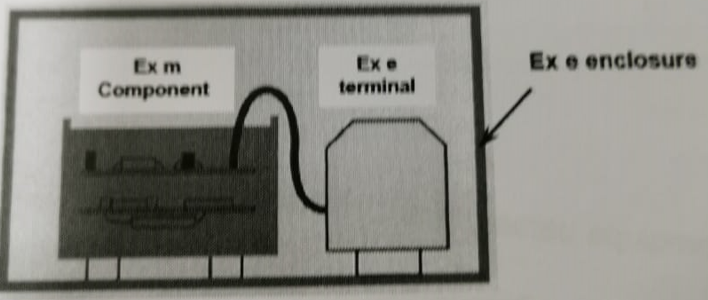
Why Ex e im hybrid protection makes sense #
No single protection concept suits every part of a complex device. A hazardous-area telephone shows this well. Its rugged casing and field terminals use increased safety, the handset and most electronics are intrinsically safe, and the small part that runs at higher voltage is encapsulated. As a result, each part gets the most practical form of protection.
The equipment label lists every method used, for example Ex e ia mb IIC T4 Gb. Installers must then respect the rules of each concept: certified glands and terminals for the Ex e part, IS parameters and segregation for the intrinsically safe circuits, and no tampering with encapsulated modules.
Inspection follows the same logic. Check the enclosure, glands and IP integrity as you would for Ex e equipment, and confirm that IS wiring is correctly segregated. For background, read combined methods of protection and Ex m encapsulation. Certification of combined equipment is handled through the IECEx scheme.


