
ElectrochlorinationCertified for the zones where others stop.
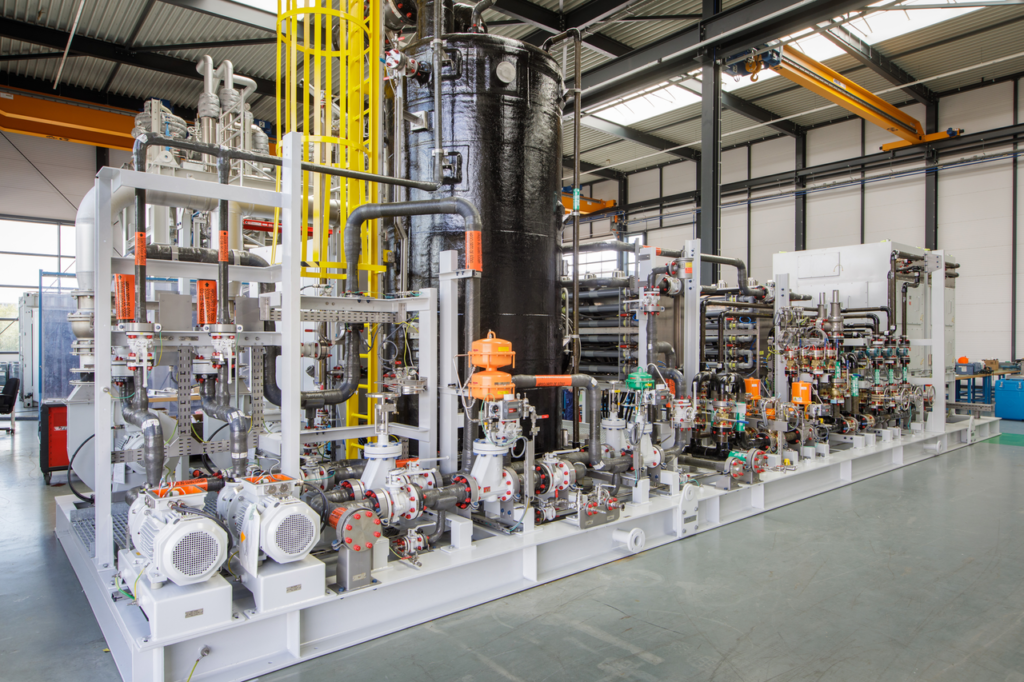
ECHLORX is AZUVIA’s hazardous area electrochlorination system. It brings ECHLOR seawater electrochlorination into Zone 1, certified under IECEx. As a result, it suits offshore modules and onshore plants where every enclosure, motor and instrument must be certified.
Why ECHLORX
- Ex-certified rectifier and control equipment
- Designed around the area classification from the start, not modified later
- One supplier for cells, power and controls
CertificationIECEx Ex eb ib IIC T6 Gb
Increased-safety (eb) and intrinsically safe (ib) protection; gas group IIC, which covers hydrogen, the gas every electrolyser produces; surface temperature class T6 (85 °C maximum); equipment protection level Gb, for Zone 1. The certificate is supplied on request.
Hazardous area electrochlorination for Zones 1 and 2
ECHLORX meets ATEX and IECEx requirements for Zones 1 and 2, as well as Class I, Divisions 1 and 2. It stops marine fouling in the seawater systems of offshore platforms, FPSOs, power plants and refineries. In addition, our team brings more than 20 years of service experience in marine anti-fouling, so the system runs reliably with little maintenance.
Each package combines ECHLOR cells with our explosion-proof rectifiers and Ex-rated controls. For details of the certification scheme, see the IECEx website.
System OverviewHazardous area electrochlorination made easy.
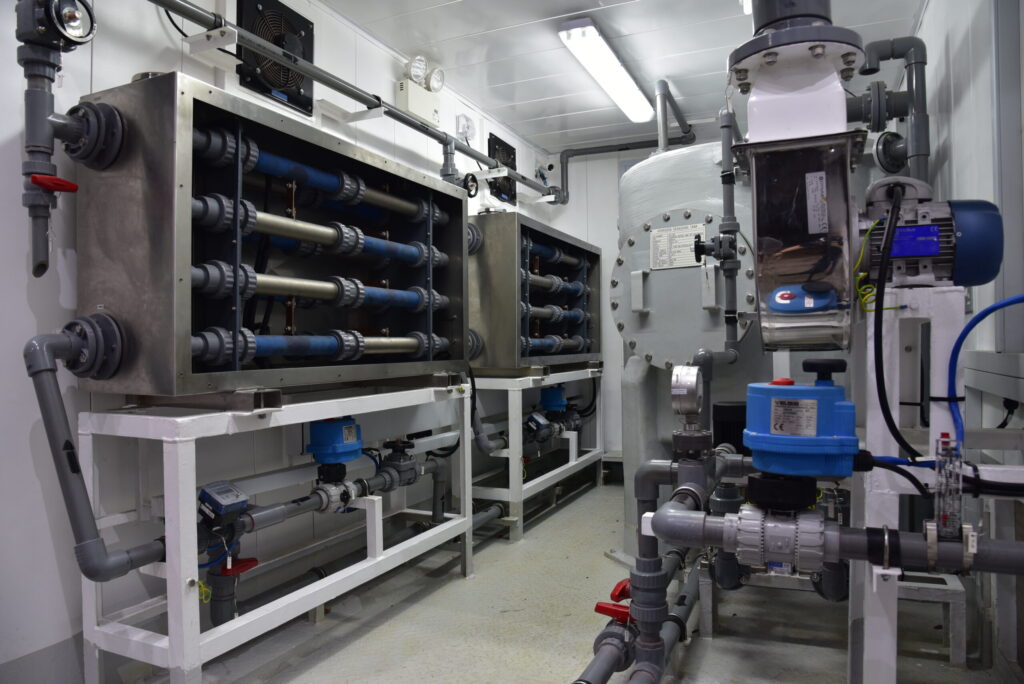
ECHLORX takes a small side stream from your seawater main and passes it through the electrolyser cells. Inside each cell, a low-voltage direct current splits part of the salt, so the cell makes sodium hypochlorite and hydrogen. Next, the system removes the hydrogen and doses the hypochlorite back at the pump suction or sea chest.
As a result, the dose reaches the whole seawater circuit, including sea chests, pipework and heat exchangers. Because marine organisms cannot settle in chlorinated water, the system stays clean. Moreover, hazardous area electrochlorination keeps every electrical item certified for its zone, so the package can sit close to the process it protects.
- Compact size
- Fewer calcareous deposits
- Less frequent acid cleaning
- Easy maintenance
- Leak-free design
- Explosion-proof versions for each zone
How hazardous area electrochlorination works
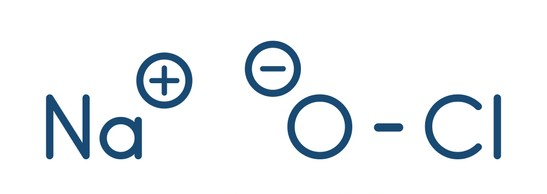
The process is simple. First, a strainer removes solids from the seawater. Then the seawater flows between the anode and cathode of each cell, where a low-voltage DC current turns part of the salt into sodium hypochlorite. Finally, a degassing tank releases the hydrogen, and blowers dilute it to a safe level.
The process uses only seawater and electricity. Therefore, you have no chemicals to buy, ship or store on board. The product is a dilute, near-neutral hypochlorite solution, which is an effective disinfectant yet far safer to handle than delivered bulk chemicals. You can read more about electrochlorination and its chemistry.
Effects of chlorine on marine growth
Chlorine is a well-proven way to control marine growth. Tests show that a constant dose of 0.2 to 0.5 ppm keeps most forms of marine fouling away.
For example, mussels may close their shells to avoid chlorinated water. However, they then cannot feed, so they fail to settle inside the system.
On the other hand, doses above 0.5 ppm can speed up corrosion of metal pipework and equipment. For this reason, ECHLORX controls the dose closely, so your seawater system stays protected without the side effects of over-chlorination.
Tell us what's possible.
Send us your duty, feedwater and location. An AZUVIA engineer will reply.