
ApplicationsMussels and slime kept out of condensers.
In power plant cooling water, mussels and slime in intakes and condensers reduce heat transfer and output.
Recommended
- ECHLOR with BPX electrolysers
OverviewBiofouling control for power plant cooling water
Coastal power stations draw large volumes of seawater through intake culverts, screens and condensers. Mussels and barnacles settle in the intake structure, while bacterial slime coats condenser tubes. The result is a higher condenser back-pressure, lower efficiency and, in severe cases, forced outages to clean the circuit.
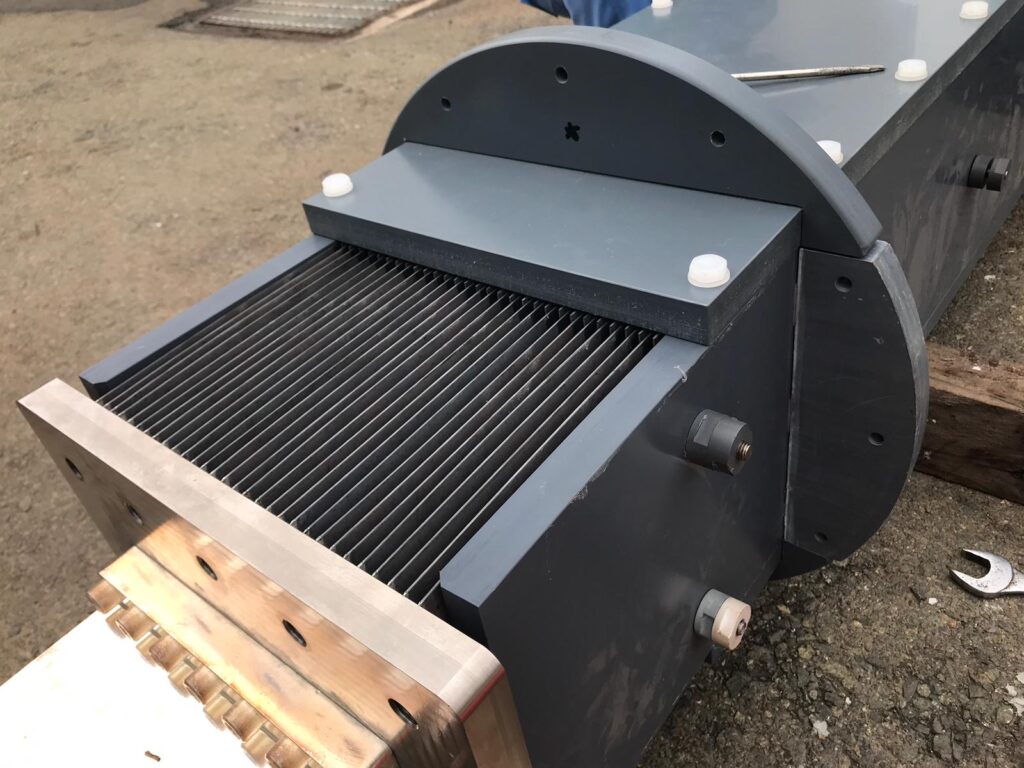
Seawater electrochlorination is the most widely used method of protecting power plant cooling water. An ECHLOR system with ECHLOR BPX bipolar electrolysers generates sodium hypochlorite from a side-stream of the cooling water itself and doses it at the intake. A low continuous dose prevents settlement, and timed shock doses keep slime off the condenser tubes.
Because the hypochlorite is made on site, there is no need to deliver and store bulk chlorine or bleach, and the dose can be trimmed to keep the residual at the outfall within the plant’s discharge limits. Large plants typically run several electrolyser trains in parallel so that one can be maintained while the others keep dosing.
AZUVIA also supplies replacement electrolysers for existing plants built by other makers, and the rectified power systems that drive them. Industry bodies such as EPRI publish guidance on cooling water biofouling that underpins most plant specifications. Share your cooling water flow and fouling history, and we will propose a power plant cooling water treatment system.
Tell us what's possible.
Send us your duty, feedwater and location. An AZUVIA engineer will reply.