
IndustriesCooling water that keeps flowing.
In power and utilities, mussels and slime in intakes and condensers cut output. Large-capacity electrochlorination keeps the cooling circuit clear.
Main solutions
OverviewCooling water protection for power and utilities
Thermal, combined-cycle and nuclear power stations, desalination plants and district cooling schemes on the coast all draw large volumes of seawater. That water carries the larvae of mussels, barnacles and other organisms that settle in intake culverts, screens, pumps and condenser tubes, along with bacteria that form slime.
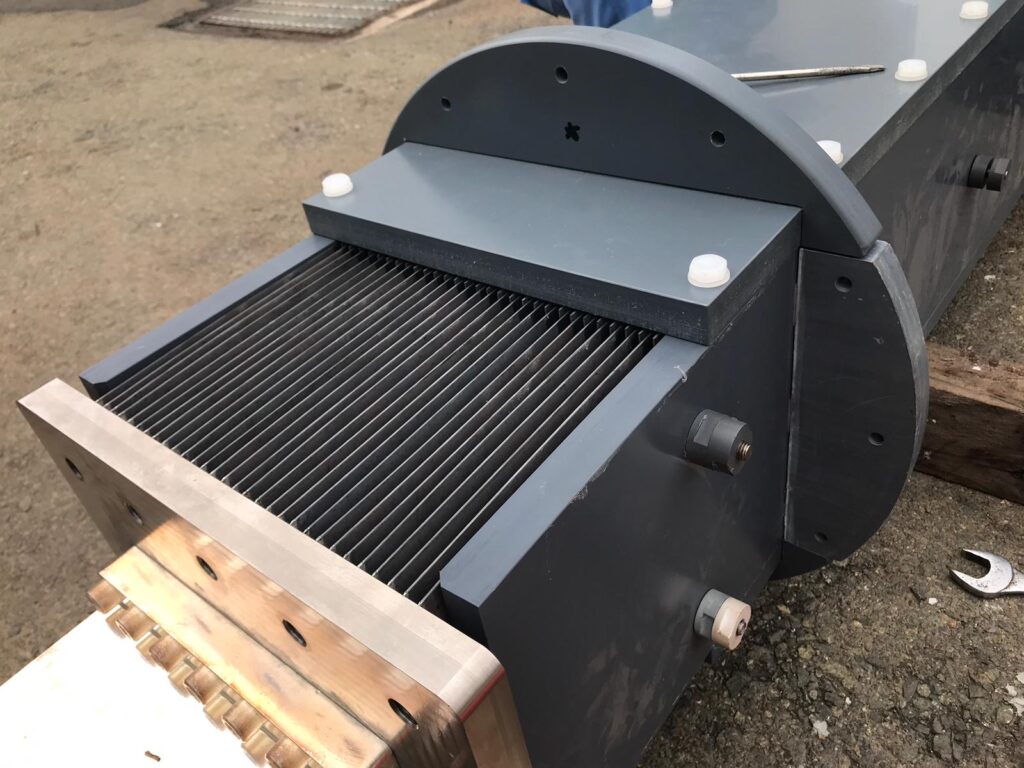
Fouling in the cooling circuit raises condenser back-pressure and lowers efficiency, and heavy growth can block intakes altogether. For power and utilities operators, the standard defence is seawater electrochlorination. AZUVIA ECHLOR systems with ECHLOR BPX bipolar electrolysers generate sodium hypochlorite at large capacities from the cooling water itself and dose it continuously at the intake, with shock dosing to control slime.
Multiple electrolyser trains provide redundancy, and dosing can be controlled to keep residual chlorine at the outfall within environmental limits. Because the hypochlorite is made on site, plants avoid bulk chlorine deliveries and storage.
Many plants already run electrochlorination from other suppliers. AZUVIA offers replacement electrolysers, ECHLOR electrolysers, rectifier upgrades and service contracts to keep those systems running. Research from organisations such as EPRI underpins most cooling water specifications. Share your cooling water flow and fouling history and we will propose a solution for your power and utilities site.
Tell us what's possible.
Send us your duty, feedwater and location. An AZUVIA engineer will reply.